
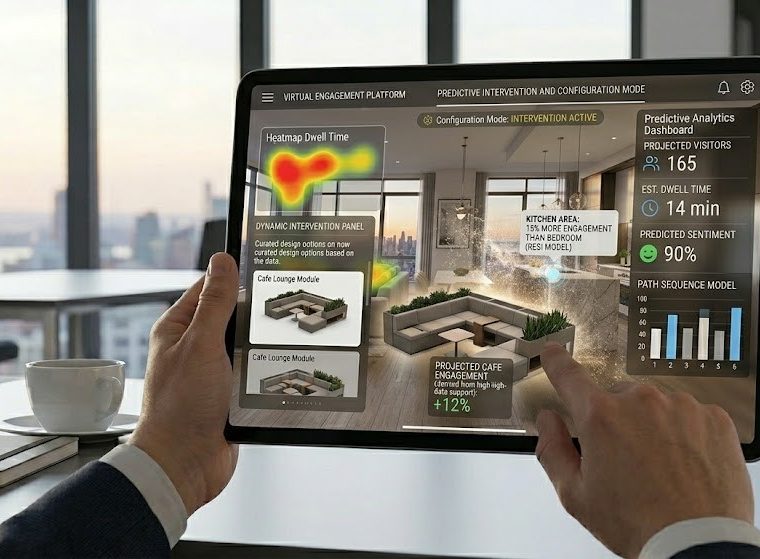
The modern property search no longer begins on the street; it begins on a screen.
However, the nature of that screen experience is undergoing a radical paradigm shift. As consumer expectations for digital interactions mature, the standard carousel of retouched, static photographs and heavily edited video walkthroughs is rapidly losing its efficacy. The vanguard of the industry is now defined by the photorealistic 3D real estate app—a sophisticated integration of spatial computing and high-fidelity rendering that is turning static real estate platforms into dynamic, interactive worlds.
The Anatomy of High-Fidelity Web Rendering
Creating a truly photorealistic 3D environment that runs seamlessly within a web browser or a standard mobile application is a monumental feat of software engineering. This technology bridges the gap between architectural CAD (Computer-Aided Design) files and consumer-facing interfaces.
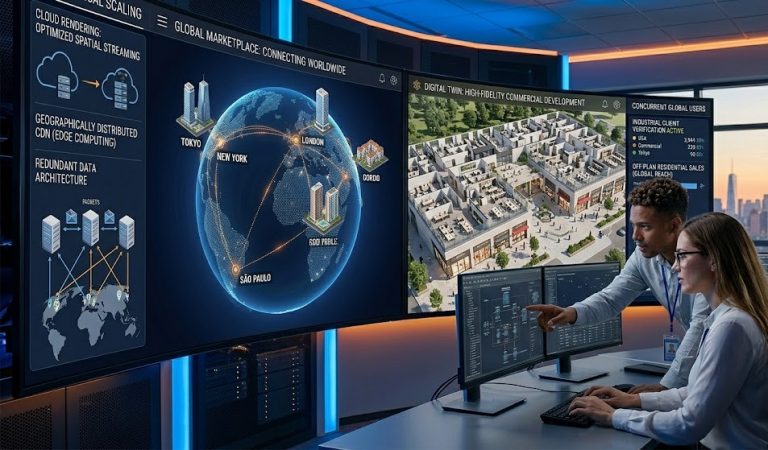
Modern platforms utilize advanced technologies like WebGL and cloud-based rendering streaming. This allows the heavy computational lifting required for realistic lighting, shadow mapping, and high-resolution textures to be processed on powerful servers, delivering a smooth, lag-free experience directly to the user’s device. The result is a digital twin of a property where users can experience the accurate reflection of sunlight on a hardwood floor, the precise scale of a vaulted ceiling, and the intricate details of custom cabinetry, all in real-time.
Moving from Observation to Interaction: The Power of Customization
While the visual fidelity of a photorealistic 3D real estate app is its most immediate draw, the true power lies in user interactivity. Advanced real estate platforms are evolving these 3D spaces from mere viewing galleries into active configuration tools.
Within these immersive environments, prospective buyers are not just observers; they are participants. Key interactive features driving engagement include:
- Real-Time Material Swapping: Users can change the finishes of a kitchen island from marble to quartz, or swap out light oak flooring for dark walnut, allowing them to visualize their personal style within the space instantly.
- Dynamic Lighting Controls: A high-end app allows users to adjust the time of day, seeing how natural light moves through the home from morning to evening, which is a critical factor for many property buyers.
- Spatial Measurement Tools: Built-in digital tape measures empower users to verify if their existing furniture will fit into specific alcoves or living spaces, removing practical doubts before a physical viewing.
The ROI for Brokerages and Property Developers
Integrating photorealistic 3D technology requires an investment, but the return on investment (ROI) for brokerages, developers, and real estate platforms is substantial and measurable.
First, these applications drastically increase user dwell time. A user might spend thirty seconds clicking through a photo gallery, but they will easily spend ten to fifteen minutes navigating a high-fidelity 3D model. This deep engagement builds a strong psychological connection to the property.
Furthermore, 3D apps act as the ultimate pre-qualification tool. By the time a potential buyer requests an in-person tour, they have already explored the layout, understood the spatial flow, and accepted the property’s core realities. This efficiency significantly reduces the time agents waste on dead-end showings, allowing them to focus their energy on closing deals with highly motivated, well-informed buyers.
The Necessity of Elite Software Engineering
The gap between a clunky, slow-loading 3D gimmick and a seamless, photorealistic application that actually drives sales is entirely dependent on the quality of the underlying code. Real estate businesses looking to deploy these sophisticated platforms cannot rely on generic, off-the-shelf templates if they want to dominate the market.
Developing a scalable, high-performance real estate platform that perfectly integrates these advanced 3D visualizers requires a specialized, dedicated engineering team. For companies aiming to build bespoke proptech solutions that redefine user expectations, exploring custom software development is the critical next step. You can discover top-tier engineering services to bring your real estate tech vision to life here: Vinode.io.
The Frontier of Spatial Commerce
The integration of photorealistic 3D apps into real estate platforms is just the beginning of a larger transition into spatial commerce. As Virtual Reality (VR) headsets become more ubiquitous and Augmented Reality (AR) capabilities on smartphones become more advanced, these 3D models will serve as the foundational assets for even more immersive experiences.
Real estate platforms that invest in photorealistic 3D architecture today are future-proofing their businesses. They are establishing the digital infrastructure necessary to lead the market, offering unparalleled transparency, interactivity, and confidence to the modern property buyer.